
What is DiSC?
DiSC is a personal assessment tool used by more than one million people every year to help improve teamwork, communication, and productivity in the workplace.
The Everything DiSC model provides a common language people can use to better understand themselves and those they interact with—and then use this knowledge to reduce conflict and improve working relationships.
What does DiSC mean?
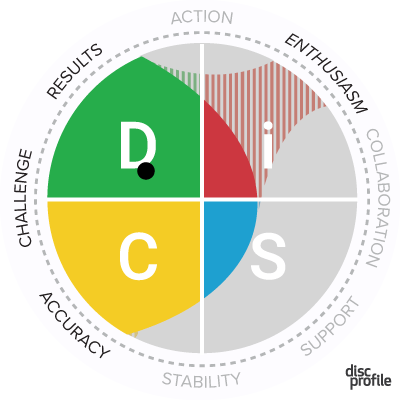
DiSC is an acronym that stands for the four main personality profiles described in the DiSC model:
(D)ominance
(i)nfluence
(S)teadiness
(C)onscientiousness
Take a free version of DiSC Personality Test by clicking this link | Click Here!
Share your results by posting a comment below!
D = Dominance | “The Winner”
D styles are motivated by winning, competition, and success. They prioritize taking action, accepting challenges, and achieving results and are often described as direct and demanding, strong-willed, driven, and determined. D styles tend to be outspoken, but can be rather skeptical and questioning of others.
Fears: being seen as vulnerable or being taken advantage of
Values: competency, action, concrete results, personal freedom, and challenges
Overuses: the need to win, resulting in win/lose situations
Influences others by: assertiveness, insistence, competition
In conflict: speaks up about problems; looks to even the score
Could improve effectiveness through: patience, empathy
DiSC Classic patterns: Developer, Result-Oriented, Inspirational, Creative
i = Influence | “The Enthusiast”
i styles are motivated by social recognition, group activities, and relationships. They prioritize taking action, collaboration, and expressing enthusiasm and are often described as warm, trusting, optimistic, magnetic, enthusiastic, and convincing.
Fears: loss of influence, disapproval, being ignored, rejection
Values: coaching and counseling, freedom of expression, democratic relationships
Overuses: optimism, praise
Influences others through: charm, optimism, energy
In conflict: expresses feelings, gossips
Could improve effectiveness through: being more objective, following through on tasks
DiSC Classic patterns: Promoter, Persuader, Counselor, Appraiser
S = Steadiness | “The Peacemaker”
S styles are motivated by cooperation, opportunities to help, and sincere appreciation. They prioritize giving support, collaborating, and maintaining stability and are often described as calm, patient, predictable, deliberate, stable, and consistent.
Fears: change, loss of stability, offending others, letting people down
Values: loyalty, helping others, security
Overuses: modesty, passive resistance, compromise
Influences others by: accommodation, consistent performance
In conflict: listens to others’ perspectives; keeps their own needs to themselves
Could improve effectiveness through: displaying more self-confidence, revealing their true feelings
DiSC Classic patterns: Specialist, Achiever, Agent, Investigator
C = Conscientiousness | “The Analyst”
C styles are motivated by opportunities to gain knowledge, show their expertise, and produce quality work. They prioritize ensuring accuracy, maintaining stability, and challenging assumptions. They are often described as careful, analytical, systematic, diplomatic, accurate, and tactful.
Fears: criticism and being wrong; strong displays of emotion
Values: quality and accuracy
Overuses: analysis, restraint
Influences others by: logic, exacting standards
In conflict: focuses on logic and objectivity; overpowers with facts
Could improve effectiveness through: acknowledging others’ feelings; looking beyond data
DiSC Classic patterns: Objective Thinker, Perfectionist, Practitioner